He is home, sober, and sitting at the table. So why does it still feel like something is off?
Sunday lunch. Marta has cooked what Daniel always asked for. He is three months sober and he is trying: he sets the table, he asks about her week. She answers, and she watches his hands. When he goes to the bathroom she notices how long he is gone. He notices her noticing.
Nobody says anything. The lunch is fine.
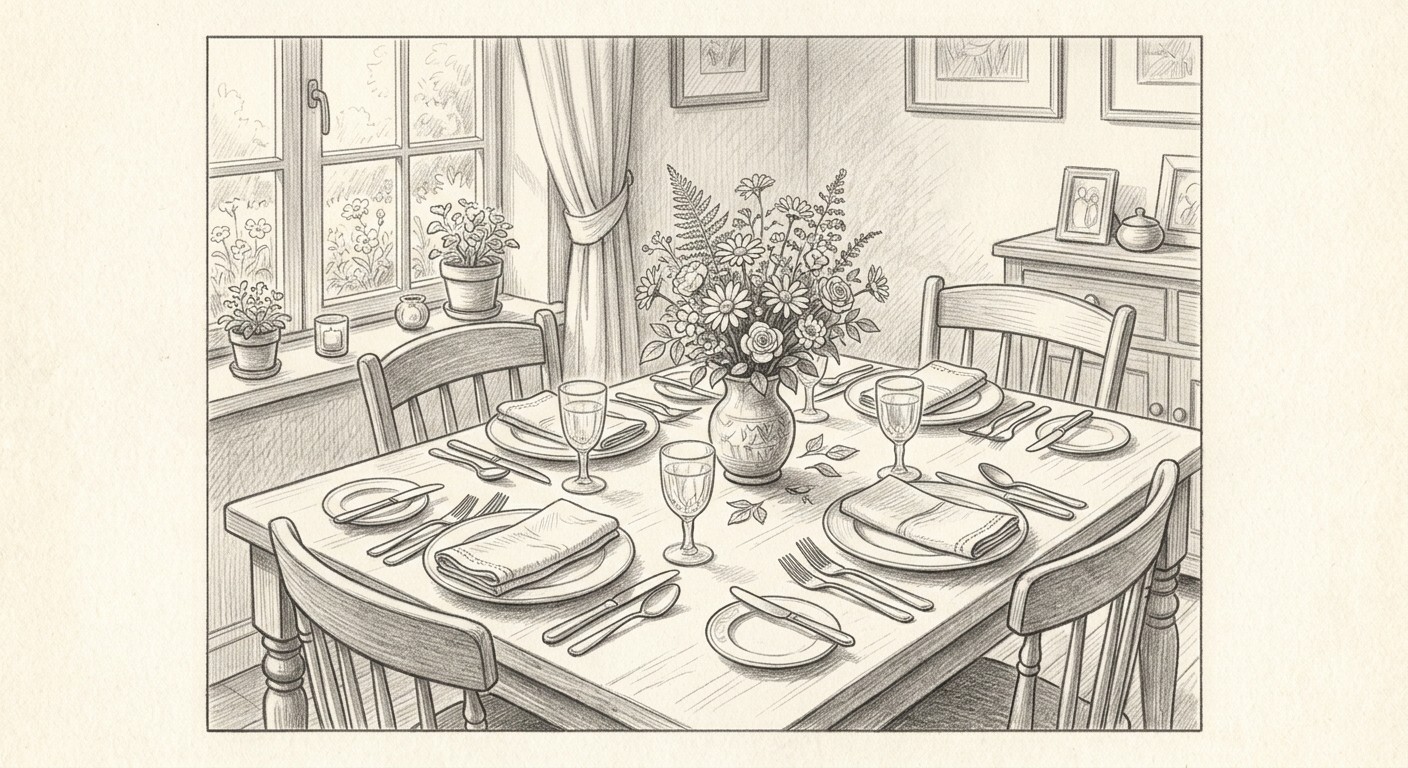
Illustration: AI-generated
Nothing went wrong at that table, and yet both of them lost something there. Marta has her son back, but not the easy trust she used to have in him. Daniel has his mother’s love, but not yet her belief. This is what is often referred to as ambiguous loss, a loss with no funeral, no clear ending. The person is here, and the relationship you had, or hoped for, is not. Because nobody died, nobody brings flowers, and the grief has nowhere to go.
Families often feel guilty about it. “I should just be grateful.” You can be grateful and still be grieving. While someone you love was using, you lived with a person who was there but not really there. Now you may be mourning the years that went, the person you hoped for, and your own exhaustion. That is real, and it does not make you unsupportive.
Two things can be true at once. I love him and I don’t trust him yet. I am relieved and I am still angry. She has changed and I haven’t seen enough of it yet. A sentence with “and” in the middle is usually closer to the truth than a sentence with “but”.
It helps to picture a hanging mobile. Touch one piece and every piece moves, then slowly the whole thing finds a new balance. A family works the same way. When one person changes, everyone is unsettled for a while, including the people who wanted the change most.
Your caution is part of your own healing. It is not a verdict on them. Their effort belongs to them, and your timing belongs to you. Trust comes back through small, repeated, ordinary things: arriving when they said they would, a call returned, a quiet Sunday lunch, and then another one.
You are doing your best, and that is enough for now. Give each other small pieces of trust: you are both rebuilding your relationship. And above all, don’t take each other’s effort for granted.
What are you holding at the same time?
Try finishing this sentence, just for yourself: “With them, I am holding ______ and ______.” You don’t have to resolve it. Naming both halves is often enough to make the next lunch a little lighter.
If this touches something heavy, talk to someone you trust: a counsellor, a family support group, a good friend. You don’t have to carry it alone either.
Ideas from Pauline Boss (ambiguous loss) and Murray Bowen (the family as a system). This story is fictional.