“I love my job, but I’m exhausted.” Swap one word and the sentence stops arguing with itself.
Inés has been offered the promotion she worked six years for. She tells her partner, “I’m thrilled, but I’m dreading it.” He answers the second half: “Then don’t take it.” The next day she tells her sister, “I’m dreading it, but I’m thrilled.” Her sister answers the second half: “Then take it!”
Inés has now had two pieces of advice, and each one ignored half of what she feels.
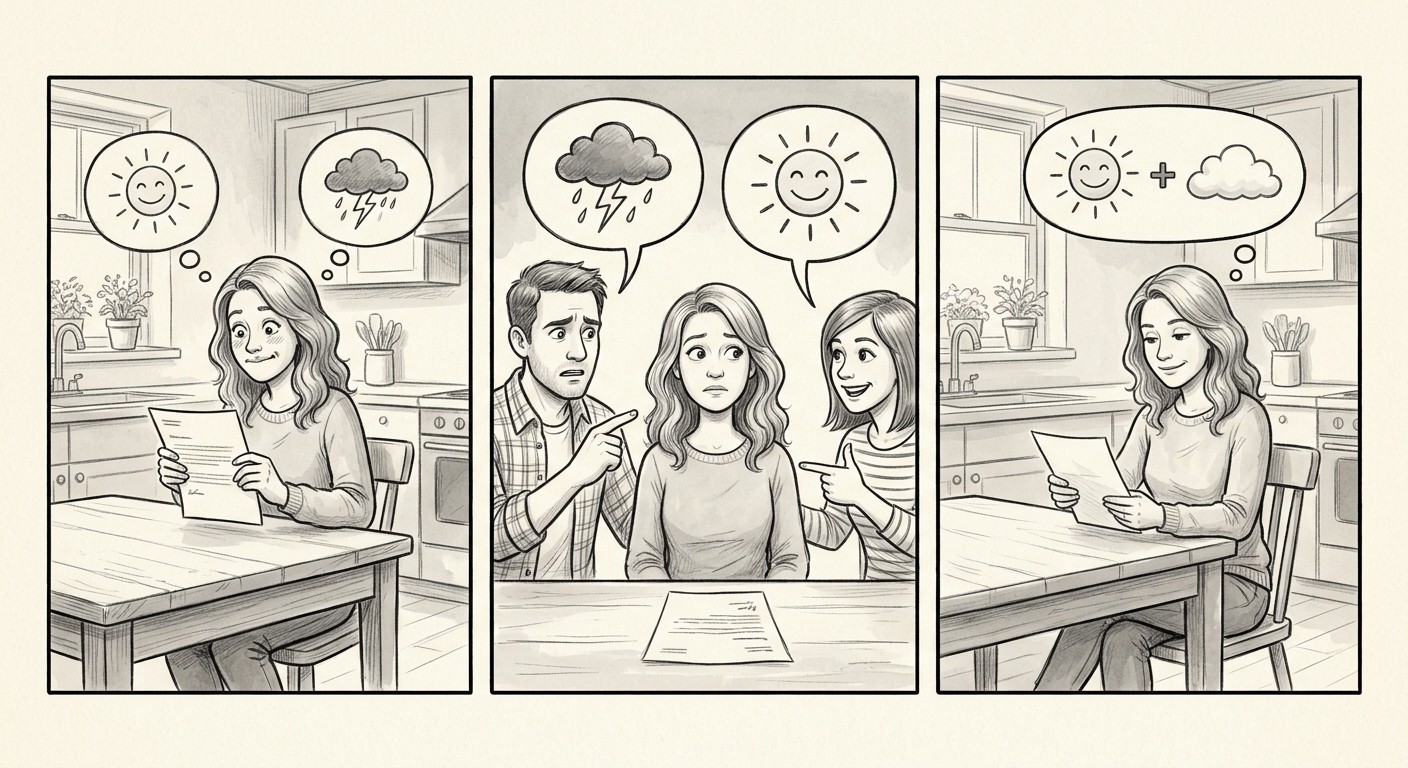
Illustration: AI-generated
“But” works like a small eraser. Whatever comes before it gets cancelled, and listeners respond to whatever comes after. We do the same thing inside our own heads: one feeling is declared the real one, and the other is treated as a mistake to be argued away.
Try the same sentence with “and”. I’m thrilled and I’m dreading it. Nothing is cancelled. Both halves are information. The thrill tells Inés what she values. The dread tells her what she will need: perhaps support, perhaps a conversation about hours, perhaps time to grieve the job she is good at and is about to leave.
I use both/and sentences a great deal, in coaching and in supervision, because most situations worth talking about contain a pair:
I love my mother and I can’t call her every day. I’m proud of my son and I don’t trust his judgement yet. I chose this change and I miss what I left. She has apologised and I’m not ready.
People often feel that holding two feelings is indecision, or disloyalty. I think it is usually accuracy. The pressure to choose one comes mostly from wanting the discomfort to be over, and from other people wanting to help us quickly.
A both/and sentence does not tell you what to do, and that is why it is useful. It stops a false choice being made too early. Once both halves have been said out loud, the next question tends to be a better one. “Should I take the job?” becomes “what would I need in place to take it well?”.
It also changes how you listen. When someone gives you a “but” sentence, you can hand it back with “and”: “So you’re thrilled, and you’re dreading it.” Most people breathe out when they hear that, because the whole of what they said has been heard.
What are your two halves?
Take one decision or relationship that is weighing on you and write: “I ______ and I ______.” Keep the “and”. If you would like to think the pair through with someone, let’s meet in a clarity session.
This story is fictional.