Monks spend weeks on a sand mandala, then sweep it away.
Grain by grain, Tibetan monks lay coloured sand into a pattern as wide as a table. It takes days, sometimes weeks. When it is complete they pray, and then they sweep it into a heap. Some of the sand is given to the people watching. The rest is poured into a river.
Nobody in the room treats this as a loss.
The ending was built in from the first grain. I often ask people what in their own life they are treating as a failure when it may simply be an ending.
Every change carries one, including the changes we wanted. A new apartment ends the café where they knew your order. A new job ends being the expert. A new country ends, for a while, the language you think in. A new relationship ends some freedom. People are often surprised by what they miss, and then embarrassed to be missing it.
Reaching a goal is an ending as well. A goal can organise years of a life, and then one morning it is done. The psychologist Tal Ben-Shahar calls the disappointment that follows the arrival fallacy: the belief that arriving will make us happy for good.
There are endings that happen to us and endings we choose. Being fired and resigning are both losses. In the first, someone else decided. In the second, I did, and I carry the question “what if I was wrong?”. In both, the part that is up to me is how I respond.
And there is the in-between: no longer who I was, not yet who I am becoming. Not knowing yet may be part of the beginning. It need not mean something has gone wrong.
The Akan people of Ghana have a word for the next step: Sankofa, “go back and get it”. It is pictured as a bird walking forward with its head turned back, carrying an egg in its beak. The idea is that it is not wrong to go back for what you forgot.
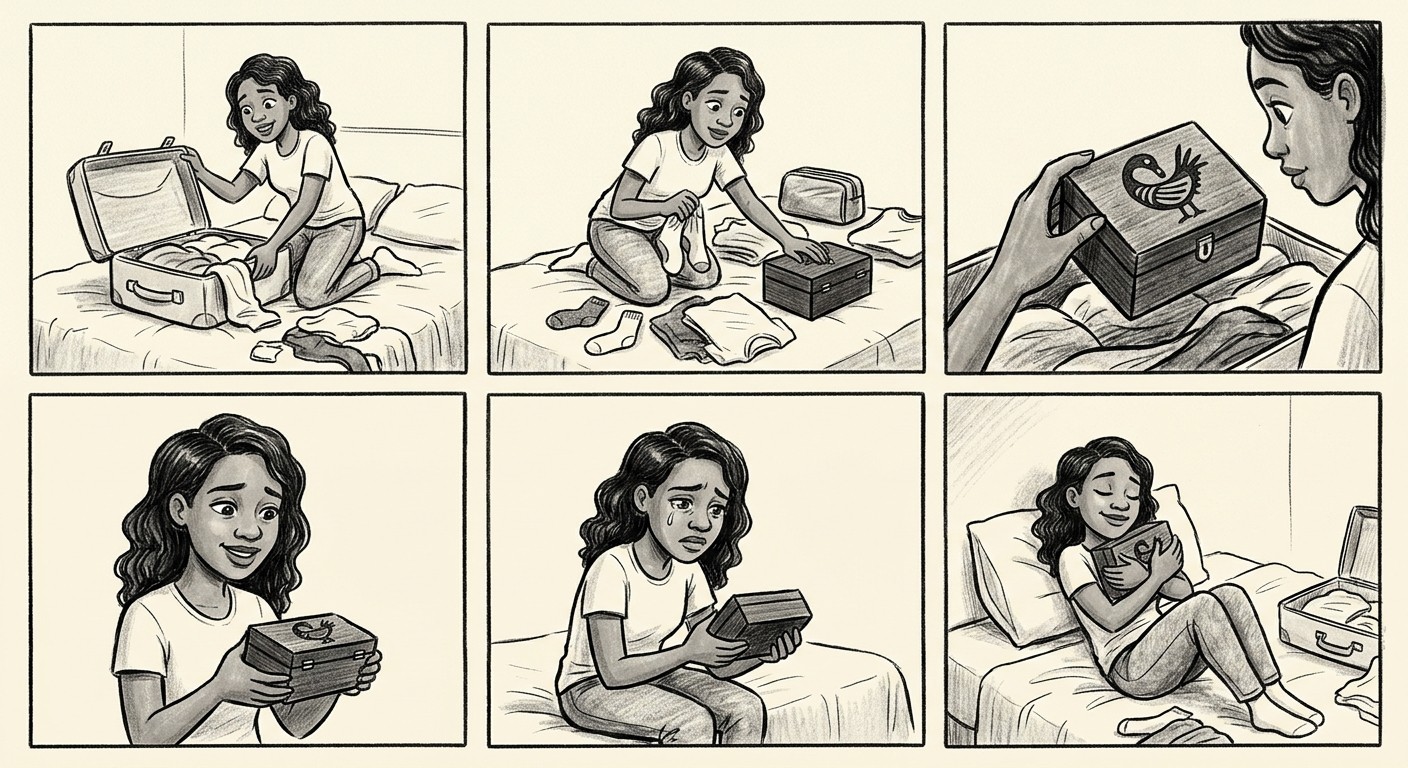
Illustration: AI-generated
I find three kinds of thing get left behind. What I didn’t know I had, such as a strength I only discovered when I needed it. What I didn’t fight for: a talent, a dream, sometimes a person. And what I took for granted and only now see the worth of.
Some things should stay where they are, because they were left for good reasons. Two questions sort them: is it still mine, and is it still worth carrying?
When something ends, I suggest a small map with four branches. What is ending, facts only. What is given, and not up to me. What I am fetching: strengths, lessons, people I keep. What is beginning: one small first step.
What are you fetching?
Name one thing that is ending for you now, and one thing you are going back for. If you would like to draw the map with someone, let’s meet in a clarity session.
Ideas from Irvin Yalom (the givens of existence) and Tal Ben-Shahar (the arrival fallacy). Sankofa is an Akan concept from Ghana.